
Fast Buds Apricot Auto: Behind the scenes of the Best Autoflower Rosin 2026
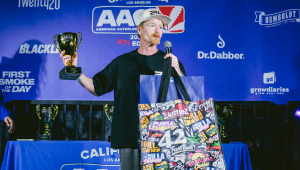
Some growers chase trends. Others chase trophies. A few quietly build processes so tight that trophies become a byproduct. James Ziegler, known in the community as Chubbs, falls into the third category.
At the American Autoflower Cup 2026, he took 1st place Best Rosin with Apricot Auto from Fast Buds and 3rd place Best Overall with Pound Cake Auto. For those who follow competitive autoflower cultivation, that result wasn’t random. It was the outcome of deliberate strain selection, disciplined cultivation, and a precise seed-to-wash workflow built around extraction quality from day one.
The grower behind the resin
James began growing nearly a decade ago after his son was diagnosed with epilepsy. What started as medical necessity evolved into full dedication to craft. He grows primarily Fast Buds autoflowers, with photoperiod plants outdoors in season, but his competitive edge has always been dialed into autos.
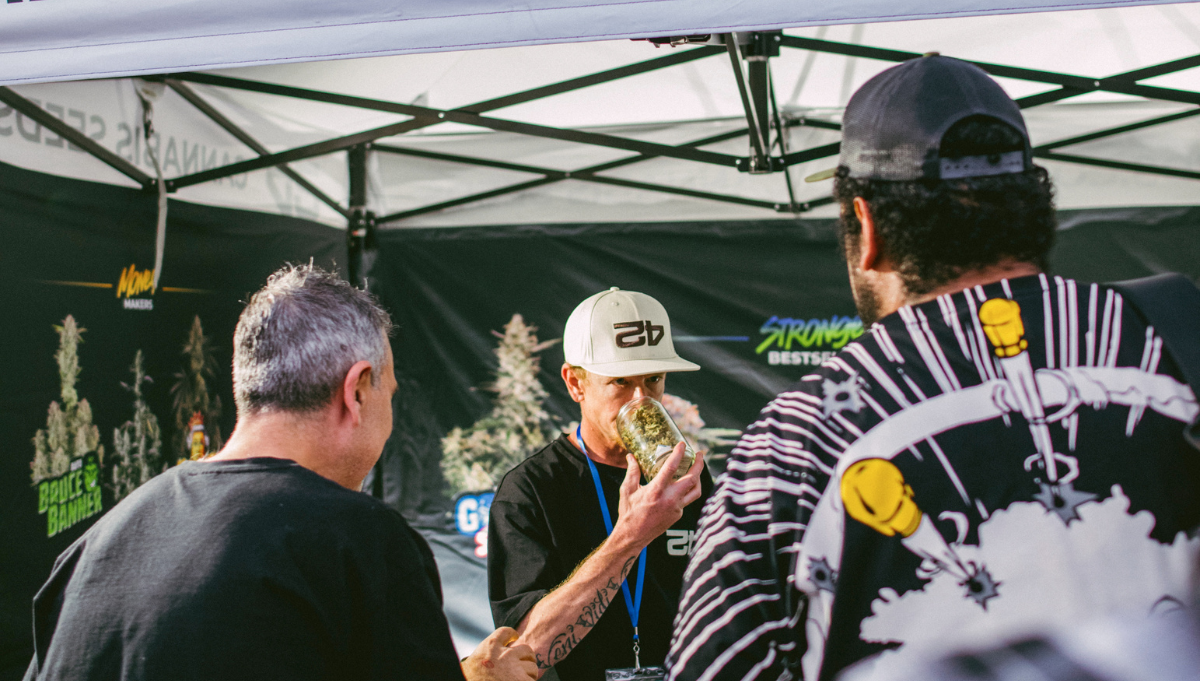
The first edition of the American Autoflower Cup was also the first competition he ever entered. The blind judging format, where reputation means nothing and only the sample speaks, changed his relationship with cultivation. From that point on, he wasn’t just growing for yield or aesthetics. He was growing for performance under scrutiny.
Why Apricot Auto stood out
When planning for the American Autoflower Cup 2026, he approached it strategically. Apricot Auto had already proven itself earlier in the year by winning 1st for Best Flower at the Masters of the Universe Cup in Hamburg. That alone signaled structural potential. But James was thinking beyond flower.
Apricot Auto is known among growers for its vigorous early growth, compact structure, and heavy trichome production. It typically runs from seed to harvest in under 60 days, which makes it efficient, but speed alone doesn’t win extraction categories. What matters for hash and rosin is resin head development, terpene preservation, and consistency across phenotypes.
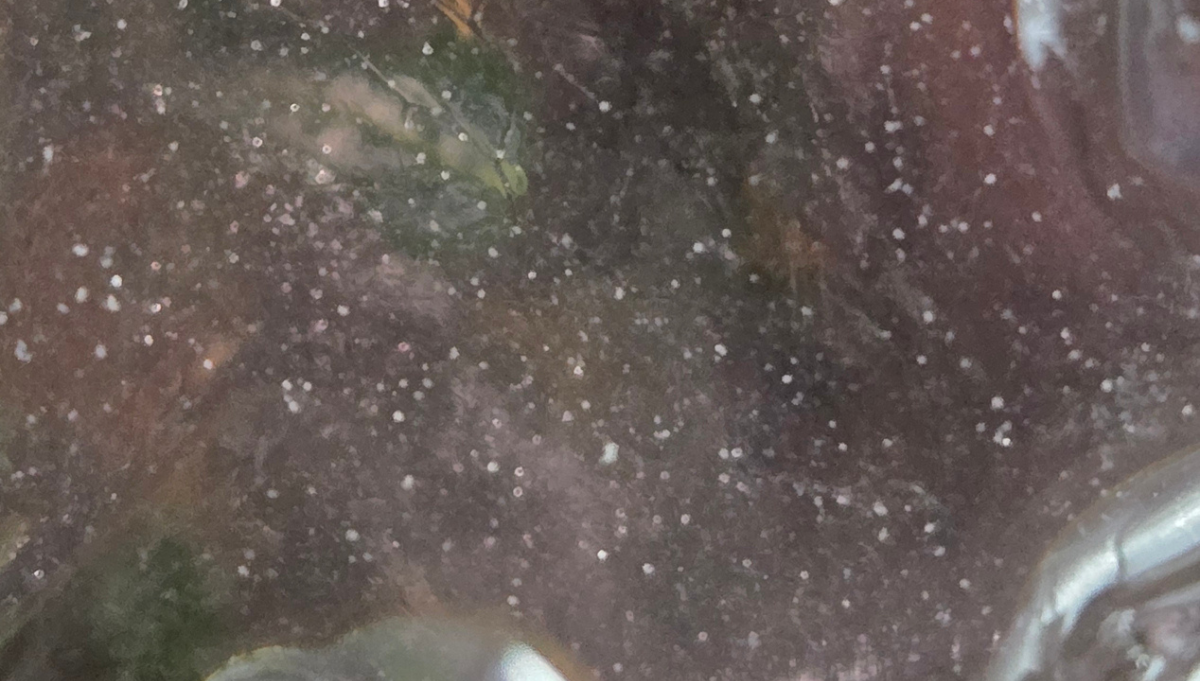
He selected the purple phenotype intentionally, expecting the terpene expression to resonate with judges. During cultivation, his focus was not simply on pushing biomass but on preserving glandular integrity. Healthy leaf surface, stable environment, and timing of harvest all feed into what happens in the wash room.
For this run, the material was harvested specifically for fresh frozen live rosin. That decision changes everything. Instead of drying and curing flower first, the plant is frozen immediately after harvest to preserve volatile compounds and maintain resin head structure for bubble extraction.
The seed-to-wash process
James washed the fresh frozen Apricot Auto using an AetherGreen V2 washing machine, setting speed to 7 and rotation to 4. He washed for 45 minutes before collecting the 73u to 159u fractions. Those micron ranges are widely considered prime territory for quality resin heads in many modern cultivars.
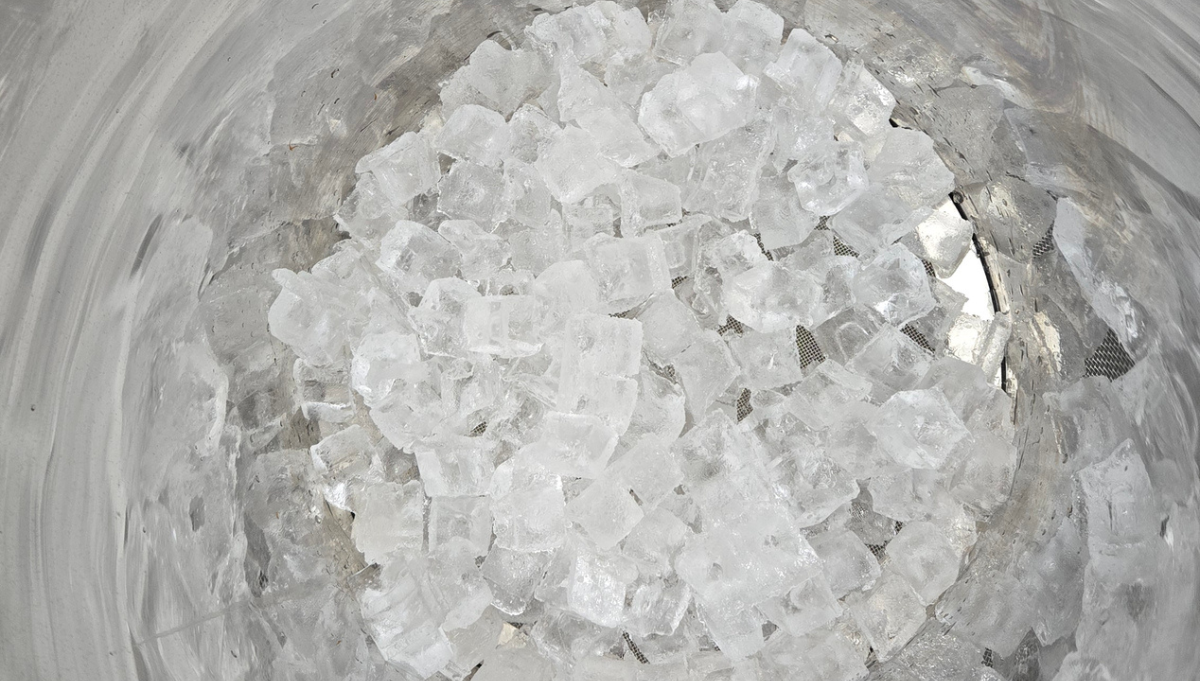
The collected hash was dried in a Harvest Right freeze dryer. Freeze drying has become standard among serious extractors because it reduces oxidation and preserves terpene clarity when done correctly. Once dried, the hash was sifted, packed into 37-micron bags, and subjected to Clear Tek before pressing.
Clear Tek, for those newer to extraction, is a refinement approach designed to reduce impurities and improve clarity prior to pressing.
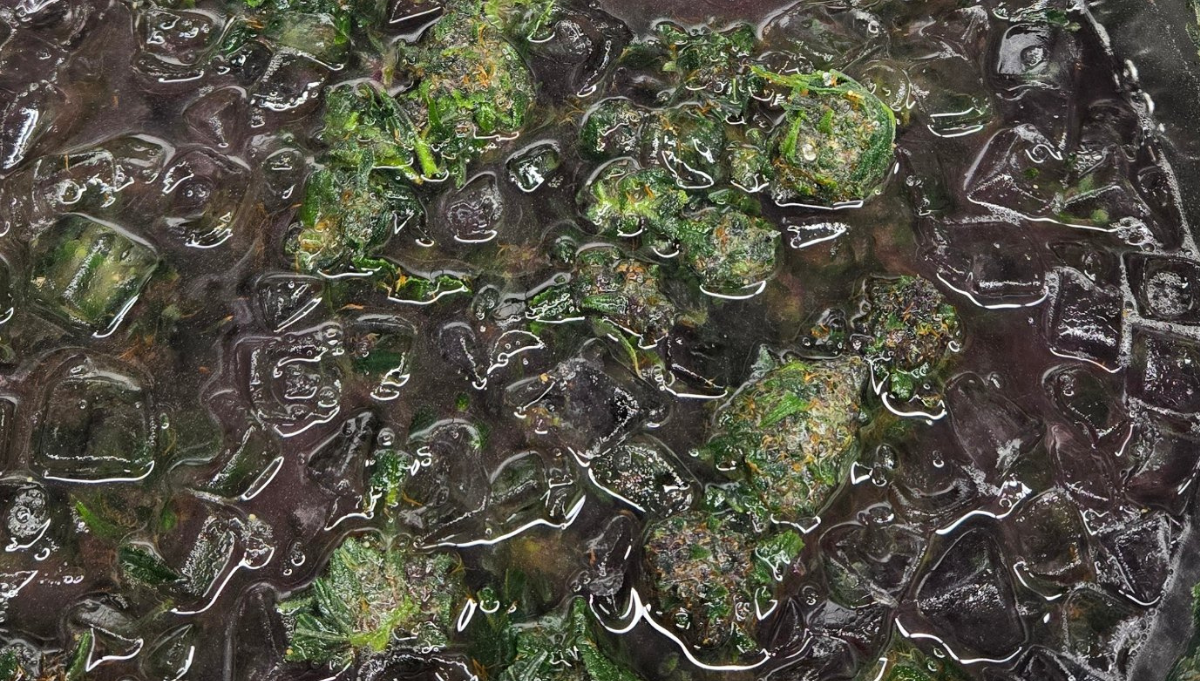
After pressing the hash into live rosin, he applied Taffy Tek, a manual manipulation technique that improves homogeneity and texture before curing.
The rosin was then placed into cold cure inside a Cannatrol unit at 62°F. Controlled temperature curing allows terpene profiles to stabilize and texture to evolve without degradation. After roughly a week, the rosin was whipped, jarred, and submitted.
What makes Apricot Auto extraction-friendly?
Growers often talk about a strain being “good for hash,” but rarely define why. In Apricot Auto’s case, several structural traits matter:
- Dense trichome coverage with well-formed resin heads
- Strong terpene retention during agitation
- Stable expression across phenotypes
- Fast cycle allowing fresh frozen timing without overstretch
- James described the aroma during the bubble wash as “intoxicating,” with terpene expression intensifying as cure progressed. That evolution is a hallmark of well-preserved live rosin. It suggests the volatile fraction survived washing, drying, pressing, and curing intact.
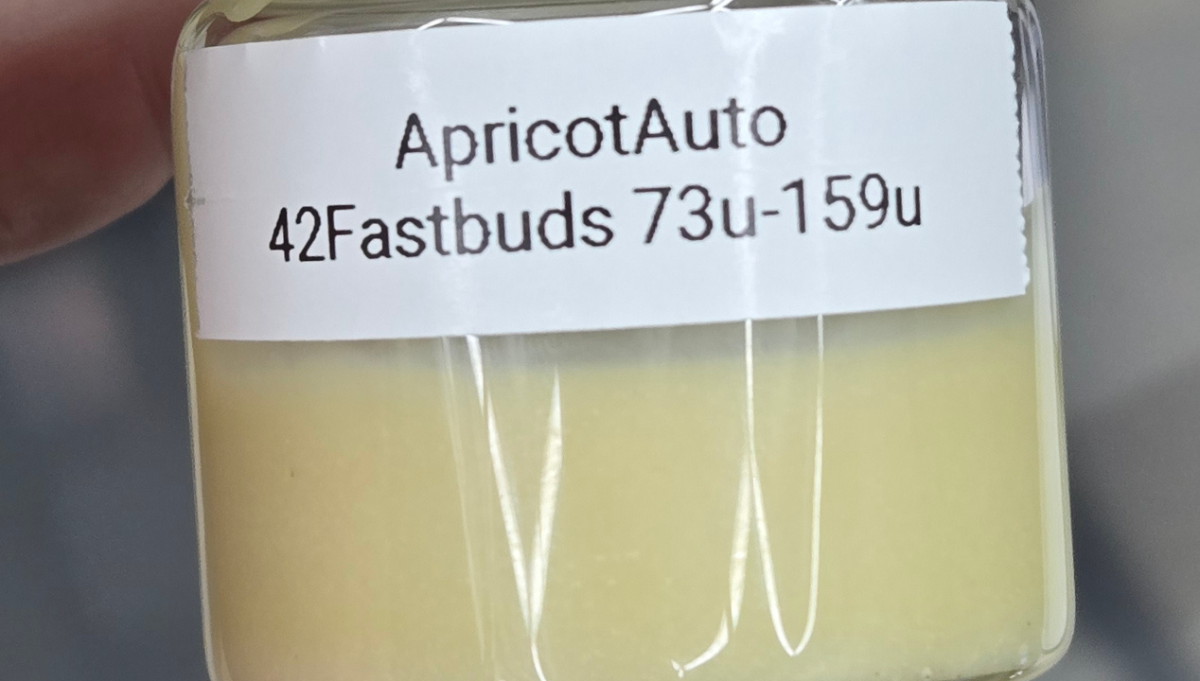
For newer breeders and growers, the lesson is clear: extraction performance begins in genetics but is revealed through handling. A strain can be resinous and still fail in the wash if harvested too late, agitated too aggressively, or cured improperly.
Pound Cake Auto and structural consistency
While Apricot Auto took 1st in Best Rosin, Pound Cake Auto earned 3rd Best Overall. Known for its dessert-leaning terpene profile and dense green-to-purple flowers, it reinforces the same principle.
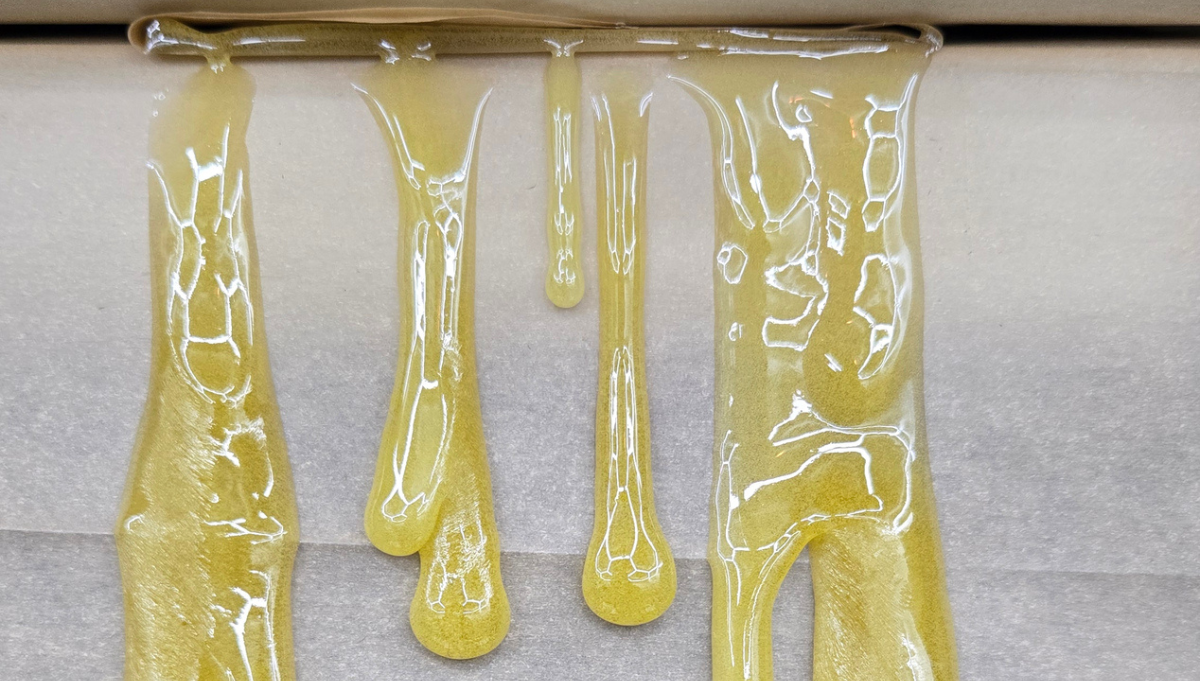
Resin density, structural integrity, and terpene clarity translate across categories when cultivation is consistent. This consistency speaks to what judges actually reward in blind settings: not hype, not branding, but clean execution.
From passion to podium
James credits the event itself for sharpening his approach. Competing in blind formats forces honesty. You can’t explain your process to the judges. The jar either performs or it doesn’t.
His journey began with medical cultivation for his son. It evolved into a disciplined pursuit of excellence in autoflower genetics and extraction. By focusing on one breeder, refining his workflow, and understanding how a specific cultivar behaves from seed to wash, he built repeatable results.
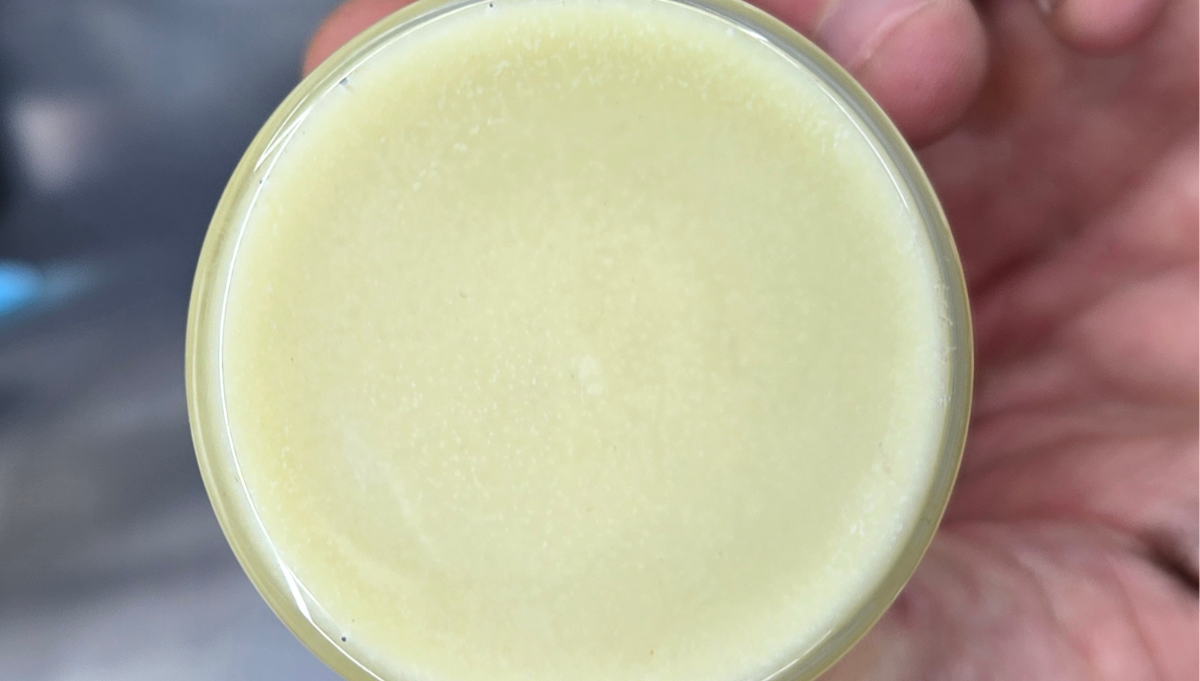
For growers looking for perfection, the takeaway is technical: select genetics with resin integrity, harvest with extraction in mind, control your wash parameters, and respect curing science.
For breeders, it’s strategic: stability and resin structure matter more than marketing.
For the curious, it’s proof that autoflowers are no longer secondary players in competitive solventless extraction. When cultivated and processed correctly, they stand shoulder to shoulder with any category.
Apricot Auto did not win on reputation. It won because the process behind it was precise, patient, and informed.
And in competitive resin, process always shows.
Want to chat in detail about the process? Join us on Discord! There's plenty of beans over there.
Comments